
Start at the seams.
Run a flashlight along the piping of the mattress. The first clue is usually a few dark specks, not live bugs.
Bed bug help, start to finish
Find out if it's really bed bugs, how whole-home heat treatment works, what it costs, and who to call. Plain answers, no scare tactics.
Know what to look for
Bites alone don't prove it. Many rashes look the same. Check your mattress seams, bed frame joints, headboard and the baseboards by the bed with a flashlight, then tick what you find.
Run a flashlight along the piping of the mattress. The first clue is usually a few dark specks, not live bugs.
An adult is about 5 mm long, the size of an apple seed: flat, oval and reddish-brown, with six legs. After feeding it swells and turns darker. Young bugs are smaller and paler, close to see-through.
Tick anything you've found to see what it means.
A crew brings in electric heaters and high-temperature fans, seals the space, and raises the whole house, condo or apartment to lethal heat. Heat kills every life stage, eggs included, and leaves no chemical residue. Pest pros boil it down to three jobs.
The heat-treatment thermometer
Upper end of air temp. Hotter risks damage to belongings.
Common target for the heated air
Kill line: adults and eggs die fast
Kills adults with long exposure; eggs survive longer
Your home today
The air runs hotter than 122°F so heat can soak into mattresses, couch cushions and wall gaps.
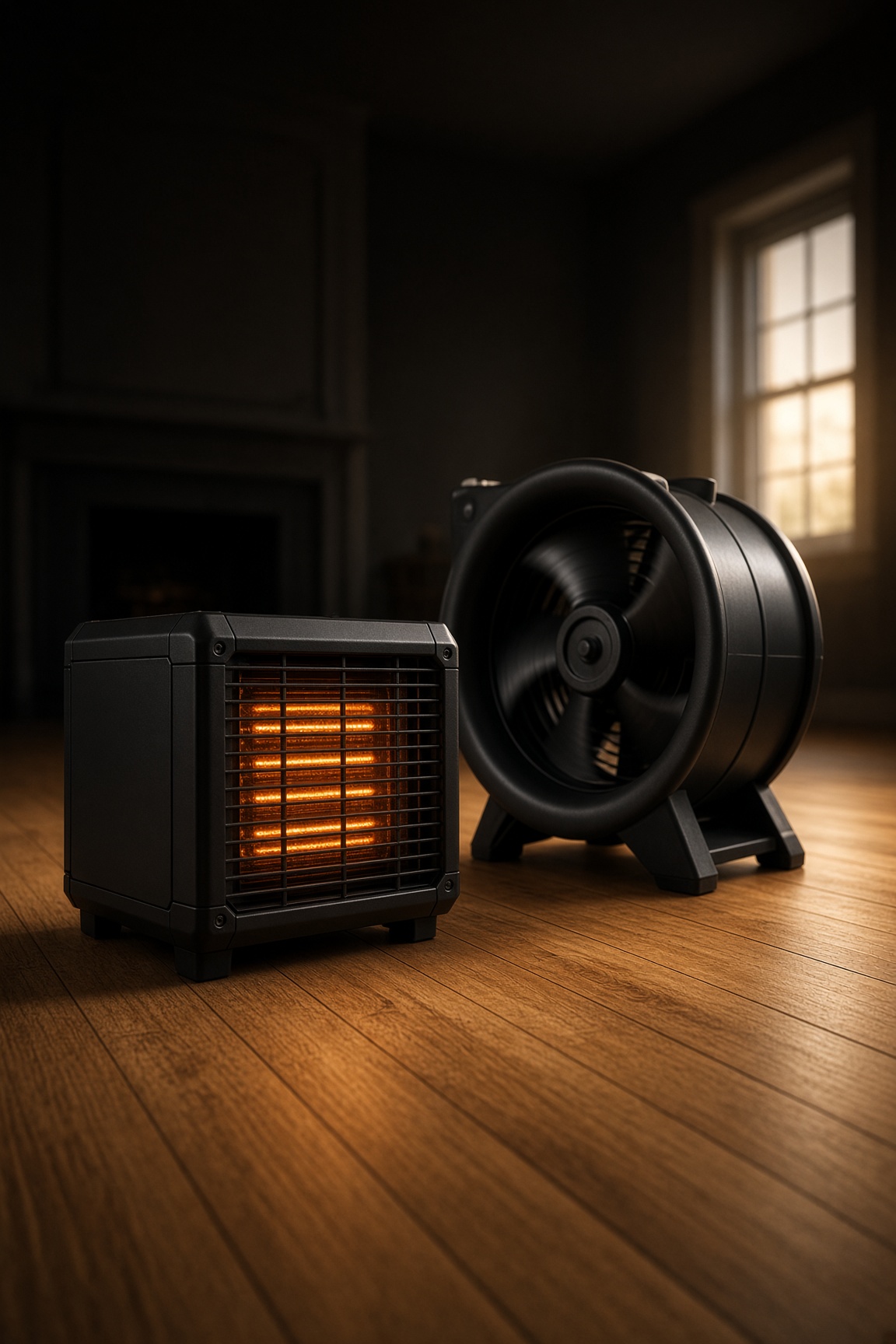
Electric heaters push air to roughly 135–140°F, held below the point where belongings get damaged.
Heat-rated fans blast hot air into mattresses, baseboards, closets and furniture so there are no cool pockets.
Wireless sensors go in the hardest-to-heat spots. It's not done until every sensor holds a kill temperature long enough.
If the hardest-to-heat spot reaches…
Industry guidance for how long a spot must stay at temperature. Your pro's sensors decide when it's done.
Work through the checklist below: take out heat-sensitive items, open drawers, strip beds.
The crew brings in heaters, fans and sensors and seals the space. You and pets leave for the day.
About 6–8 hours total, longer for big or cluttered homes.
Same-day return is typical. Wash and dry bedding on high heat.
Use mattress encasements and interceptor cups. Activity after two weeks means call the pro back.
Don't try whole-room heat yourself. The EPA warns that DIY heat attempts often fail, and makeshift heaters create real fire risk. What you can do safely: run clothes, shoes and bedding through a hot dryer, and use a portable heat box for luggage.
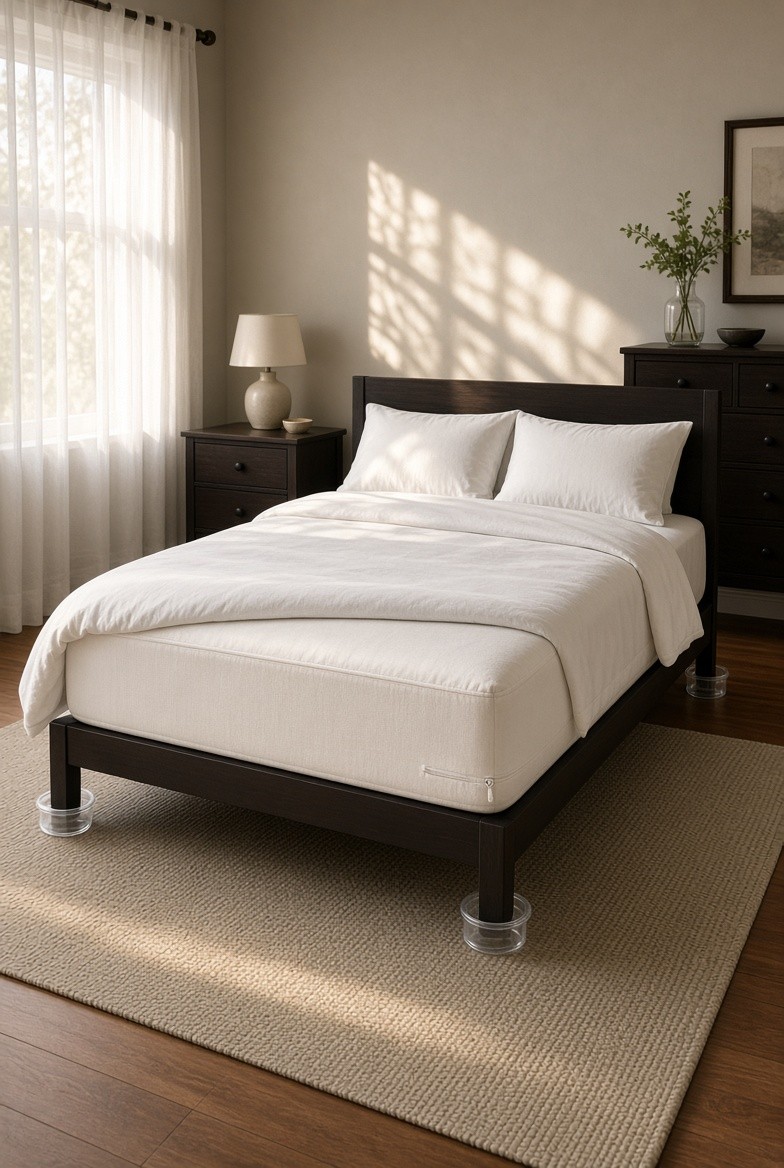
A zippered encasement on the mattress and interceptor cups under each bed leg. Anything that survived gets trapped, and you can see it at a glance.
| Method | Kills eggs? | Visits | Best for | Watch out for |
|---|---|---|---|---|
| Whole-home heat | Yes | Usually 1 | Heavy infestations, fast chemical-free fix | Higher upfront cost; no lasting protection. |
| Heat + targeted chemical | Yes | 1–2 | Apartments and condos with shared walls | Get products in writing. |
| Chemical only | Often not | 2–3+ | Light infestations, tight budget | Many bed bugs resist common sprays; takes weeks. |
| Steam (spot use) | On contact | DIY or add-on | Mattress seams, couch cracks | Only treats what it touches. |
| Foggers / bug bombs | No | — | Nothing | Scatters bugs into walls and neighbors' units. |
Virginia Tech Extension puts professional heat treatment at roughly $500 to $5,000. Where you land depends on the size of the space and the size of the crew. Get two or three written quotes.
One room
$300–$1,400
Apartment or condo
$800–$2,500
Whole house
$1,500–$5,000+
Ask every company:
Do you use wireless temperature sensors? What temperature must each sensor hold, and for how long? Is a re-treatment covered if bugs show up within 30 days?

For apartments and most rentals other than single-family homes and duplexes, Florida law makes the landlord responsible for bed bug extermination unless your lease says otherwise in writing.
Fla. Stat. § 83.51(2)(a). Laws differ by state. General information, not legal advice.
Free matching
Tell us about your place. We'll connect you with licensed companies that do whole-home heat in your area.
Pest control company? Get listed and receive bed bug heat-treatment requests from your service area.
Become a partner